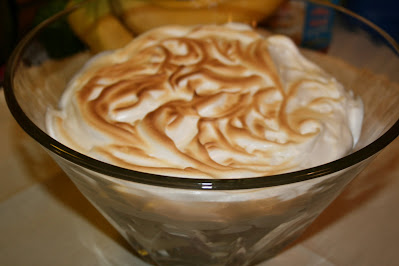
An easy, step by step tutorial on how to make homemade meringue.
How to Make Homemade Meringue
 This is a tutorial that goes with my homemade banana pudding post, but it can apply to any meringue. Hope that you find it helpful!
For banana pudding, I use three eggs, which are separated. This will work for just about any pie also, though if you want to "mile-high" it you can increase it to 4 eggs with no other adjustments. You can also purchase meringue powder - the kind that are used for making icing for decorator cookies. Usually found in the craft section of your local discount store. The yolks are used in the custard for the banana pudding, but if you are not using the yolks in your recipe, just put them in the fridge and add them to some carton egg whites or use them with a whole egg to make an omelet for breakfast the next day!
Put the egg whites in the bowl of your mixer and beat them on medium low until they begin to get frothy. Add a pinch of cream of tartar and increase speed to medium.
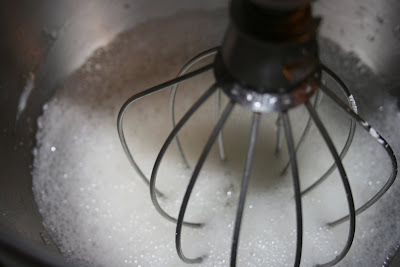
Almost ready to start adding in the sugar.
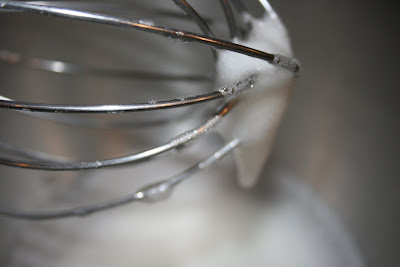
Getting there.
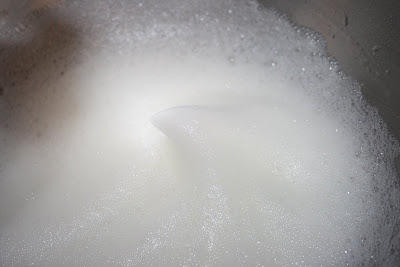
Now we're getting soft peaks and it's time to start adding the sugar. For this recipe I used 1/4 cup of sugar in the meringue, sprinkling it in, just a little bit at a time. Increase speed on your mixer to medium high. Soft peaks will begin to form.

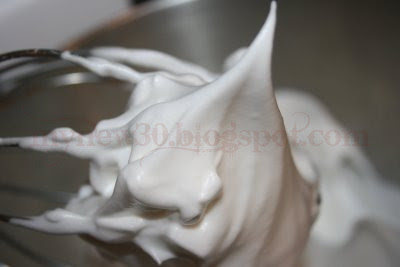
Keep beating until you have stiffened peaks that will stand up on their own like this. Aren't they pretty?
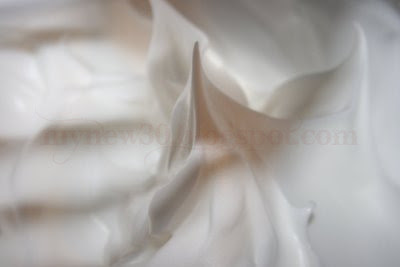
At this point you can actually turn the bowl completely upside down and the egg whites will not fall out. They're ready!
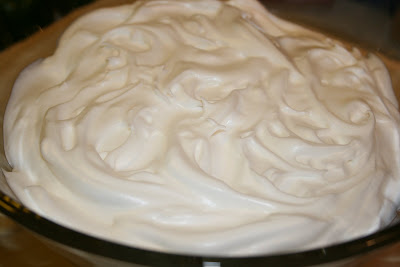
Spread the egg whites all across the top of the dessert and swirl it around a bit. This forms nice peaks that will brown and look really nice.
For most meringues, you'll put the finished dish in a 350 degrees F oven for about 15 to 20 minutes,just long enough to brown the peaks, or like me, under the broiler with the door ajar. A word of caution - the broiler only takes mere seconds, so you'll have to keep a peek on your peaks! Don't walk away, don't get distracted, don't wanna burn 'em for sure!
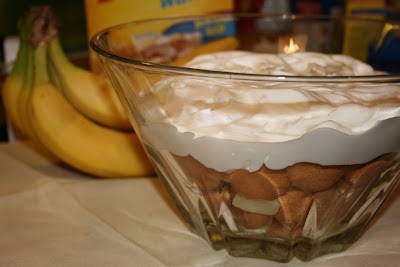
And isn't that such a pretty presentation? Go ahead, add a meringue to your homemade banana pudding and you'll be the belle of the ball - just sayin'...


Recipe: How to Make Homemade Meringue
©From the Kitchen of Deep South Dish
Prep time: 15 min |Cook time: 20 min | Yield: Enough for 1 pie
Ingredients
Instructions
- 1/4 cup granulated sugar
- 3 egg whites
- Pinch of cream of tartar or baking soda
Prepare the meringue right before or at the same time that you are making the filling. You'll want to apply the meringue directly on a hot filling. Separate the egg whites and yolks into separate bowls; set aside the whites to come to room temperature. Add the egg whites to a glass or metal mixer bowl and beat on low speed until egg whites begin to look frothy. Add in the cream of tartar, increase speed to medium and beat until soft peaks begin to form.
Continue beating on medium, slowly adding in the sugar a little at a time. Beat until stiff peaks begin to form, and meringue is soft, but stiff enough that if you turn the bowl upside down, the meringue will not leave the bowl. Spread the meringue all over the top of the hot filling and completely to the edges, using a spatula to create swirls. When topping banana pudding, place on the middle or lower rack of the oven, under the broiler, with the door ajar, but only for mere seconds. Alternatively, you can preheat the oven to 350 degrees F and bake for about 15 to 20 minutes. Follow directions for a meringue topped pie. This makes enough meringue to cover a pie or banana pudding. Double it if you want the mile high effect.
Some tips for meringue success:
- The old wives tale for candy about rainy and humid days applies to meringue too. Humidity is nothing more than water vapor in the air and, as the moisture does with candy, can affect the way your meringue turns out.
- Use large or extra large, room temperature eggs - they seem to whip better at room temperature rather than cold from the fridge. Separate them while they are cold, then let them come to room temperature about 20 to 30 minutes for bigger volume.
- Separate eggs individually into separate bowls before adding the whites to your mixer bowl. Even the tiniest speck of yolk will ruin your meringue.
- Beating the meringue in a clean and dry bowl is essential - meaning there cannot be any residue of any kind in the bowl, such as oil residue, or moisture. A glass, ceramic, metal, or copper bowl works best and never use a plastic bowl. Those are notorious for retaining oils and residue even when they look perfectly clean. Keep your fingers out of the whites - they carry natural oils that can interfere too!
- I always use cream of tartar. It acts as a stabilizer and just a pinch will do, about 1/8 teaspoon. If you are mixing in a copper bowl, omit the cream of tartar or other acids - it will react with the copper and give an off-color to the whites.
- Always apply the meringue to a hot filling immediately and be sure to spread it out to the edges with no gaps. Adding meringue to a cold dish very often will cause weeping to occur, so try to make the meringue first or at the same time as the filling, so that it goes right on a hot filling immediately. This also starts the cooking process for the inside of the meringue. Spreading to the edges of the dish helps to seal the meringue and prevents it from shrinking away from the outside edges of the baking dish.
- Weeping is almost always caused by putting meringue on cold filling because it doesn't allow the process of the egg whites cooking from the inside out to begin. If you have tried everything else but still have problems with weeping, try using cornstarch as your stabilizer. In a small saucepan, mix 1 tablespoon of cornstarch with 2 tablespoons of cold water until blended. To that, add 1/2 cup of boiling water and cook until mixture is clear and thick. Set aside to cool completely. When you prepare your meringue, after adding the sugar, drizzle the cornstarch mixture into your beaten egg whites (omit the cream of tartar) a little at a time, mixing on low. Once incorporated beat on high until fluffy.
- Place into a preheated 350 degrees F oven for 15 to 20 minutes or until the peaks of the meringue brown, or place on the lower rack of the oven under the broiler and with the door cracked until browned. It won't take but seconds, so watch it closely so it doesn't burn!!
Source: http://deepsouthdish.com
Requires Adobe Reader - download it free! ©Deep South Dish

☛ Are you on Facebook? If you haven't already, come and join the party! We have a lot of fun & there's always room for one more at the table.
Material Disclosure: Unless otherwise noted, you should assume that post links to the providers of goods and services mentioned, establish an affiliate relationship and/or other material connection and that I may be compensated when you purchase from a provider. You are never under any obligation to purchase anything when using my recipes and you should always perform due diligence before buying goods or services from anyone via the Internet or offline.
121217BD
.